What Happens During A Typical Pool Removal In Melbourne?
Table of Contents
- Initial Site Assessment & Planning
- Permits & Local Requirements
- Preparing the Site for Removal
- Breaking Down the Pool Structure
- Excavation & Material Removal
- Backfilling & Compaction
- Site Restoration & Finishing
- How Long Does a Typical Pool Removal Take?
- What Types of Pools Can Be Removed?
- Considering Your Next Step
- Get in Touch
An old swimming pool can slowly shift from being a feature to becoming a burden. What was once a place for summer afternoons may now sit unused, taking up valuable space and requiring ongoing upkeep. For many homeowners, removing the pool opens up new possibilities, whether that’s creating a garden, extending outdoor living areas or preparing the property for sale.
Understanding what’s involved in the process can make the decision easier. Pool removal isn’t just about digging a hole and filling it in. It follows a structured sequence of steps that address safety, site conditions and local requirements.
Below is a breakdown of what typically happens during
pool removals in Melbourne, from the first assessment through to the final site restoration.
Initial Site Assessment & Planning
Every pool removal in Melbourne begins with a detailed look at the property. This step shapes how the project will proceed and identifies any factors that may influence the work.
During this stage, considerations often include:
- The type of pool construction, such as concrete, fiberglass or above ground
- Access to the backyard for machinery & equipment
- Nearby structures, fencing or landscaping features
- Soil conditions & drainage characteristics
This early planning phase helps outline the approach and determine whether a partial or full removal is more suitable for the site. It also allows homeowners to discuss their future plans for the space, which can influence how the area is prepared once the pool is gone.
Permits & Local Requirements
Before any physical work begins, it’s important to address council regulations. Pool removal may require permits or approvals depending on the property and scope of the project.
This step may involve:
- Lodging applications with the relevant local authority
- Providing documentation about the removal method
- Meeting safety & environmental guidelines
- Arranging inspections if required
Navigating these requirements can take some time, so it’s typically handled early in the process. It helps avoid delays once the project is underway and ensures that the removal aligns with local planning frameworks.
Preparing the Site for Removal
Once approvals are in place, the site is prepared for the main works. This stage focuses on creating a safe and accessible environment for excavation.
Preparation tasks may include:
- Draining the pool & managing water disposal
- Disconnecting electrical & plumbing systems
- Removing pool accessories such as ladders, pumps & filtration units
- Setting up protective barriers or temporary fencing if needed
Clearing the surrounding area also allows machinery to move freely and reduces the risk of damage to nearby features. At this point, the site is ready for the structural removal phase.
Breaking Down the Pool Structure
The next step involves dismantling the pool itself. The method used depends on the construction type.
For different pool types, the process may look like:
- Concrete pools: Sections are broken up using specialised equipment before being removed or repositioned
- Fibreglass pools: The shell is typically cut into manageable pieces for extraction
- Above ground pools: These are dismantled in sections, often requiring less heavy equipment
This stage can be one of the more visible parts of the project, as the pool structure is physically taken apart. The goal is to reduce it to a form that can either be removed from the site or repurposed within the ground, depending on the chosen removal method.
Excavation & Material Removal
After the pool structure is broken down, excavation begins. This step clears out remaining materials and prepares the space for backfilling.
Key activities during excavation include:
- Removing debris, broken concrete or fibreglass sections
- Excavating surrounding soil where required
- Transporting waste materials off-site in accordance with disposal guidelines
- Levelling the base of the excavation area
Proper handling of materials is important, particularly when dealing with large volumes of concrete or reinforced structures. This stage sets the foundation for what comes next.
Backfilling & Compaction
With the pool removed, attention turns to filling the space. Backfilling is a critical step that affects the long-term stability of the ground.
The process generally involves:
- Placing layers of clean fill material into the excavation
- Compacting each layer to reduce the likelihood of future settling
- Grading the surface to match surrounding ground levels
- Allowing for natural drainage patterns
The choice of fill material and compaction method can vary depending on how the land will be used later. For example, areas intended for landscaping or light structures may have different requirements compared to those planned for heavier construction.
Site Restoration & Finishing
Once the ground has been filled and levelled, the site moves into its final stage. Restoration focuses on making the area usable and visually consistent with the rest of the property.
This stage may include:
- Spreading topsoil over the filled area
- Preparing the surface for turf, garden beds or paving
- Reinstating fencing or boundary features
- Cleaning up remaining debris & equipment
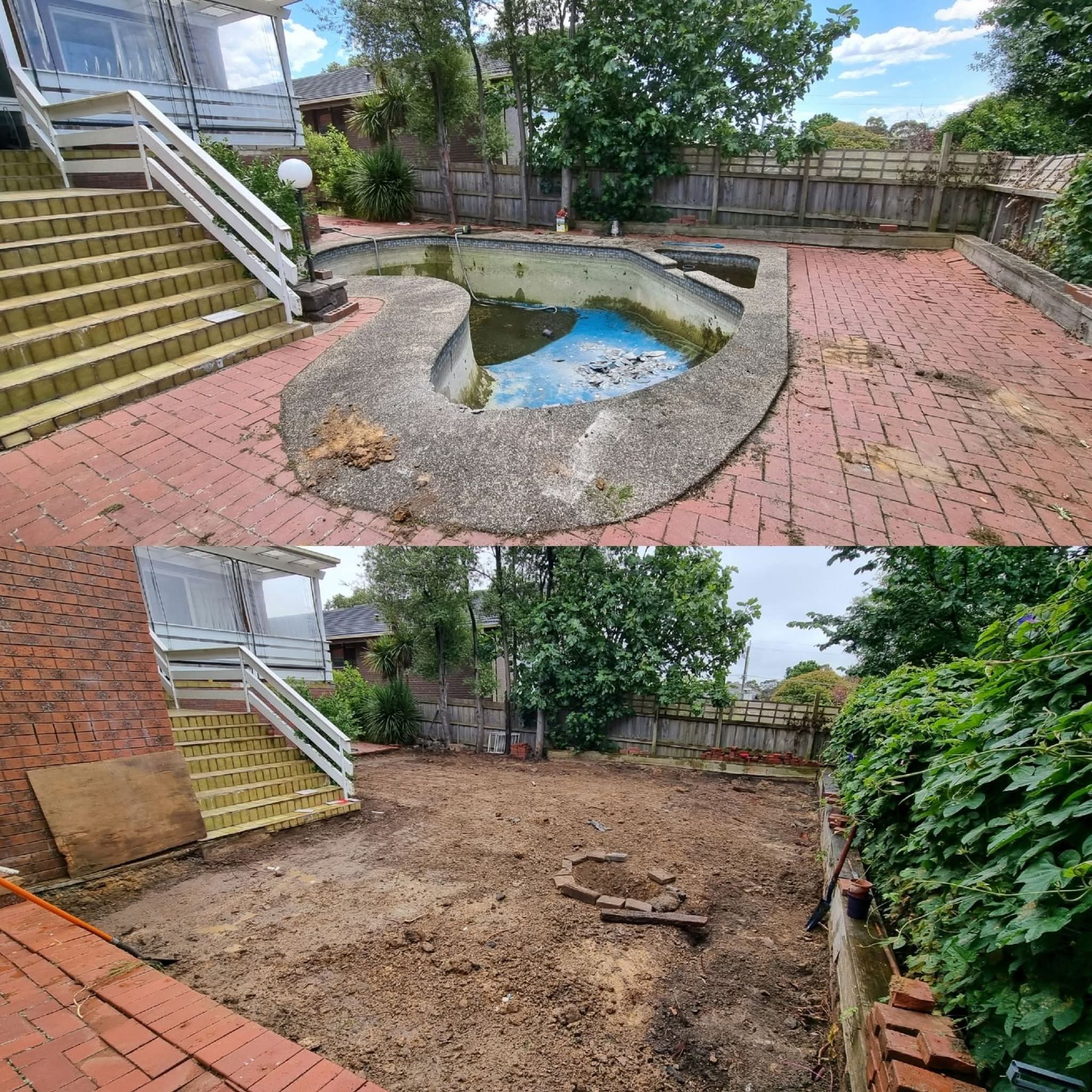
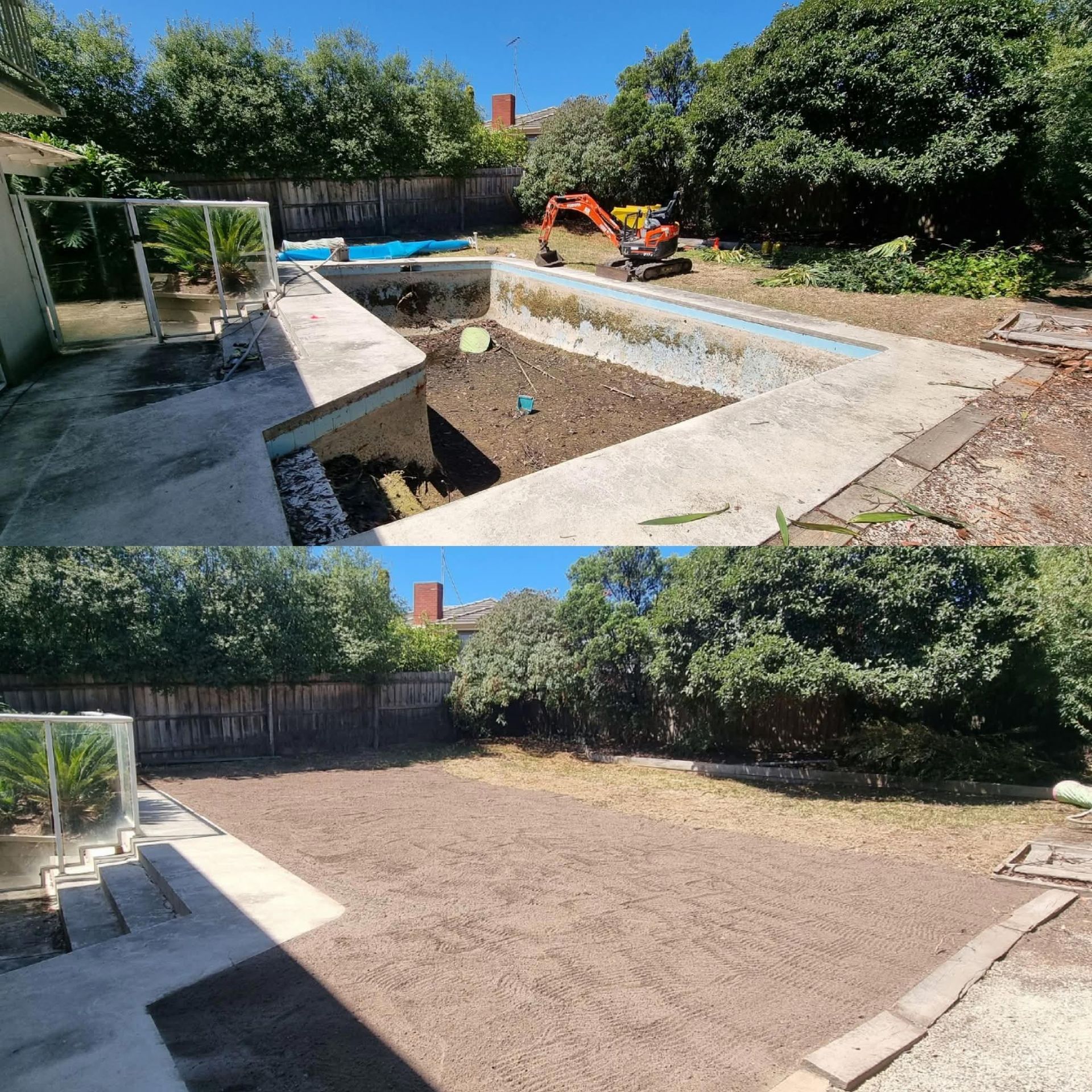
At this point, the space begins to resemble a blank canvas. Homeowners can then move forward with their plans, whether that involves landscaping, building or simply enjoying a more open yard.
How Long Does a Typical Pool Removal Take?
The timeframe for pool removal can vary depending on several factors, but most projects follow a general sequence.
Typical durations may include:
- Planning & approvals: Several days to a few weeks, depending on council processes
- On-site work: Often completed within a few days to a week
- Final restoration: May take additional time depending on landscaping plans
Factors that can influence timing include weather conditions, site accessibility and the type of pool being removed. While some projects progress quickly, others may require additional steps based on site-specific considerations.
What Types of Pools Can Be Removed?
Most residential pools can be removed, though the method used will depend on how they were built.
Common pool types include:
- Concrete pools: Often require more intensive demolition due to reinforced structures
- Fibreglass pools: Typically removed by cutting and lifting sections
- Above ground pools: Generally simpler to dismantle & remove
- Vinyl liner pools: Involve removing the liner & structural supports
Each type presents its own considerations, which is why the initial assessment plays an important role in determining the most suitable approach.
If you’re weighing up whether to move forward with removing an old or unused pool, understanding the process can help you plan ahead. From permits and preparation through to excavation and restoration, each stage contributes to reshaping your outdoor space.
Get in Touch
If you’re ready to take the next step, All Over Pool Removals can walk you through what’s involved and help you plan your project. Removing a pool in Melbourne can involve local council considerations, varying soil conditions and access challenges that differ from property to property. Get in touch with us to discuss your site and arrange a time to move forward with your pool removal plans.